
My wife and I have a hobby, we call it yard sale-ing. Most weekends during summer we drive to different neighborhoods and towns hunting for estate sales and yard sales.
Our kids love it, cheap toys are abundant.
My wife loves it, vintage clothing is always of dependable quality.
And I love it too, because I occasionally find a very old book.
A few months ago, I found: “How to enlarge and improve your vocabulary” By Richard D. Mallery published in 1944.
Since I’ve taken to reading this volume, underneath the topic of the book there is a cultural subtext that the writer most likely was never aware of. Repeatedly, you will see phrases casually used such as:
“Gather up 4-5 of your friends for this activity...”
“When you are at your next evening circle...”
“At a large family gathering...”
The author is making the assumption that the reader has a large social circle. And that’s because in 1944 this would have been considered the default, rather than the exception. But how can this be, how can the difference be this stark?
I can’t gather up 4-5 friends for anything, because I don’t have 4-5 friends.
But Mr. Mallery assumed that the average person in 1944 did, and not only that the reader would have friends, but that at least 4-5 of them would want to do a vocabulary building activity.
I did some further research on the time period. In particular, mentions of social gatherings excluding holidays in popular magazines and books.
“When you have invited a large group of friends to afternoon tea it is usually easier to serve it from the dining table…” -1944 Good housekeeping
“Service of Dinner: If you are so fortunate as to have a well-trained maid your role is an easy one. But it is the hostess without skilled help, who still manages to entertain with grace and distinction, who is the everlasting envy of her friends.” - Woman’s Home Companion Cook Book 1942
“Every time the boys got together to talk politics, it seems, they started arguing about religion.” – Written in to the New Yorker, 1947
Each of these mentions treat social gatherings as an unremarkable fact of life. The magazines of the time instructed how to entertain guests, because they assumed you already had people that you wished to invite over.
Through all of the research I have done, one thing is now abundantly clear.
I’m desperately lonely.
And not on a purely personal level. Compared to the past, we are all desperately lonely in the modern age.
Do you have 4-5 friends that would come over and play a game with you?
Do you entertain guests at least once every two weeks?
Have you ever been to a dinner party with a bunch of adults your age?
How often do you go over to someone’s house that you’re not related to?

So why are we all so lonely now?
Death of the extended family
Families have gotten considerably smaller since the invention of birth control. Not only has the number of average children dropped, our culture has changed from family oriented to individualist.
In the early 1900s, it was completely normal to be in proximity to your uncles and aunts, cousins, second cousins, third cousins twice removed (I don’t know what that actually means), And so on.
Large families beget large obligations. With every additional family member, at the very least you will have to attend at least one wedding, several birthdays, at least one graduation, and hopefully only one funeral.
My wife and I have a friend from an extremely large evangelical family. She has 13 cousins. She told us that this summer she is attending 8 weddings.
I’ve been to 4 weddings in my entire life, and one of them was my own!
Her three children have incredibly rich social lives because of her massive family. Imagine the friends and social connections you would make if you went to 8 weddings in one summer.
And it’s not just friendship, romantic relationships decline when families shrink in size too.
Before the sexual revolution, the most common way for couples to meet was actually through relatives and mutual relationships. Many people think it was bars and cold approaches that provided this, that’s not correct. The most common marriage formed like this:
17 year old boy attends his 16 year old (female) cousin’s birthday party, notices one of her friends is cute and starts to talk to her. Due to the mutual relationship and bond, teenage romance.
Then they get married and happily ever after. Or they don’t, but at least they met.
What happens when that boy never has a cousin? The teenage boy never meets the girl, he doesn’t have a reason to go to that neighborhood otherwise. The two of them stay home, and she swipes left on him on tinder because he’s not over 6ft.
Cold approaching a woman to start a relationship is actually a historical aberration. Women are very suspicious of strangers, and for good reason. Only the most attractive guys are able to get over this initial impulse. And that’s lead to the modern phenomenon of “Are we dating the same guy?”.
In the past, women would never have to ask this question because meeting someone always included a mutual relationship. If she’s meeting her friend’s brother, she already knows if he has a wife or not.
This also allowed women and men to perform a soft background check on each other. If he/she is a cheater, gambler, abusive, etc. You won’t want to introduce him to your family member!
Despite the smaller family sizes, you will spend more time taking care of children now if you choose to have them. Despite me having a brother and sister, they both chose to be careerists and not have children. As a result, my children have no cousins, and their aunt and uncle work 50+ hour workweeks and they only have time to see my kids on holidays.
In a better world, my sister who is 11 years my senior would have had at least one child after she got married when I was 16. And that child would be around 15 years old today. Boy or girl, they would be a most welcome baby sitter for my little kids. And in turn, I would have been a babysitter for her back when I was younger.
But she never had children, and neither did my brother. Outside of my parents, I have 0 babysitters. And it is a huge burden to be the primary caregiver to a small child. Everyone needs a break sometimes, and having a cousin, nephew/niece, aunt/uncle who can watch the baby for a few hours is a Godsend to young mothers and fathers. Most likely the modern increases in postpartum depression and the constantly lowering birthrate are the result of this novel intergenerational lack of support.
Many people from both sides of the political spectrum blame the low birthrate on purely economic factors. The death of the extended family is far more to blame, as the countries with the highest birthrates today are often the poorest.
I do actually have cousins, though I haven’t seen them in years. They live on the other side of the country, which leads nicely into my second reason:
Transient lifestyles
Growing up, I had a small group of friends in my neighborhood. There wasn’t very many kids around me, but there were still enough that we got to play outside and ride our bikes. We all went to school together and it mostly stayed that way until graduating high school.
After high school, I didn’t go to college right away, but most of my friends did. I lost contact with almost everyone due to the sheer distance between us. When you can no longer go and see that person, they often stop being your friend.
In college, I made a whole new group of friends in a new city. However, after graduation they all went their separate ways. The only person from college I still talk to is the woman I married.
Now that I’m in the workforce in a third city, I have yet to make a new group of friends. My high school friends are in different cities far away from me, and the same with my college friends. After graduation my social circle shrank to 0 as I surrounded myself with strangers in an impersonal city. It’s been almost 7 years now, my social life has just begun to recover.
Serious advice, don’t graduate from college single. The number of eligible bachelors/bachelorettes you meet will drop by 99% the moment you leave your dorm.
Our lives are now transient in a way that has never happened before. Not only is it commonplace to get a job in another city, uprooting your entire social life, several times in your life.
Even more cruelly, this can happen to parents while their children are living with them. Moving the child away from relatives, familiar school friends and teachers, and asking them to start all over again.
Each time we lose our circle of friends, we become more insular in case it happens again.
I recall a few “new students” from elementary school. They would arrive one day, not really speak to anyone, and be gone a few months later. The human brain is simply not equipped to manage our current transient lifestyles. With the advent of globalism and freedom of movement between nations, the problem has only gotten more severe as we move further and further away from where we belong.
As we grow older, we are less outgoing. Old people do not make friends as easily as young people. One of the great blessing of the school system is the congregation of people your own age. Your social life will likely never be stronger than when you are attending a school, mostly due to demographics. It’s unusual to be friends with someone who is more than 5 years your senior or junior. This is one of the reasons why college culture is so ingrained in America despite the massive costs. College is one of the only reliable places where young people congregate.
Lack of interdependence
This is going to seem off-topic, I promise it is not.
In the game World of Warcraft (2004), part of the game design is that your character can only learn 2 professions. Everyone is a monster slaying adventurer, but you cannot be a miner, blacksmith, AND engineer. You must choose only two.
However, if you play the game you will eventually run into a situation where you need something from another profession. Engineers need an item from blacksmiths, blacksmiths need an item from alchemists, etc. The entire point of this system was not to make people create 10 characters, but to socialize.
If you are an enchanter, in order to make your armor stronger you need an item that only blacksmiths can craft. What is the blacksmith going to want in return? Probably to make his armor stronger too. And because you’ll probably be around the same level, you might just recruit him to help you take down that ridiculously tough guy at the end of the In dreams quest-line.

The game was designed so that it would be extremely hard to be anti-social. Doing everything yourself is impossible, it is an MMO not a single player game. The blueprint WOW was based on is actually pre-industrial society.
Society used to operate on a web of relationships between people that were interdependent on each other.
The butcher, the baker, the candlestick maker. Each of them had a trade and something they could be relied on for. Some of you reading this likely have a last name such as, Fletcher, Gardener, Baker, Smith, etc. All of these are jobs that cemented someone’s place in society. If you have to go and get your bread everyday from the baker, you’re probably going to develop some kind of relationship with him.
“Hey Tim, how are the kids?”
For the first time in human history, this interdependence has been obfuscated.
You don’t visit your baker to buy bread, you buy mass produced bread in stores. Instead of speaking to your butcher, you buy pre-packaged meat. We no longer visit cobblers to buy shoes, the shoes are just made by 11 year olds in Vietnam and shipped here.
You can live several weeks of your life today without ever speaking to another human being. This was simply not possible before.
The game of life was not designed to allow it, we made it this way. Your food was cooked in a kitchen that made 500 of that dish today. It’s delivered by someone who will never learn your name. It will be eaten and discarded with indifference as you pretend to be friends with a streamer who will never know you exist.

“Before you eat or drink anything, consider carefully with whom you eat or drink rather than what you eat or drink.” -Epicurus
Our society has been designed to maximize shareholder value, rather than the happiness of those within it. It is more efficient to bake bread industrially, but it is not better. Any system that is optimized for the sake of the system rather than those who uphold it, does not deserve those who uphold it.
What is good for the beehive is not always good for the bees.
Women joined the workforce
Many people have likely agreed with everything that I have to said up until this point. However, this is where a knee-jerk reaction will kick in. Our society has been heavily propagandized to believe that prior to the 1970s, every wife was miserable and sexually frustrated.
My source is any Hollywood movie about the 1950s.
However, have you ever asked yourself the question: What exactly did women do all day before they entered the workforce?
Women have always worked, housewives didn’t just sit at home on the couch all day.
If you ask an AI, you’ll get a list like this.
Baking bread and preparing food from scratch.
Washing clothes, often by hand.
Sewing, mending, knitting, and making or altering clothing.
Caring for children.
Managing household purchases and finances.
Entertaining relatives, neighbors, and friends.
Participating in church, charitable, and community organizations.
Visiting relatives and neighbors.
Pay attention to the bottom of the list. Relatives, neighbors, church, community organizations, all of these are social activities. This was not limited to small-scale community management either. If they were ambitious and driven, they would create the Red Cross (Clara Barton 1881) or similar organizations. Such as the Ladies’ aid society:
A typical Ladies’ Aid Society was locally organized by women and might raise money or provide direct assistance for poor families, widows, orphans, sick people, churches, hospitals, or soldiers’ families. They commonly held sewing circles, socials, suppers, fairs, bazaars, and other gatherings to raise funds.
Women are the more social sex. In general, men prefer things and women prefer people. That’s why it’s the “male loneliness” epidemic not simply the “loneliness” epidemic. This does not mean women have weathered this experiment unchanged:

Many of women’s domestic duties had a social component.
Washing clothes together, knitting and sewing together, caring for children in a group.
Women used to be the social caretakers of their families and society. A role that many of them still attempt today.
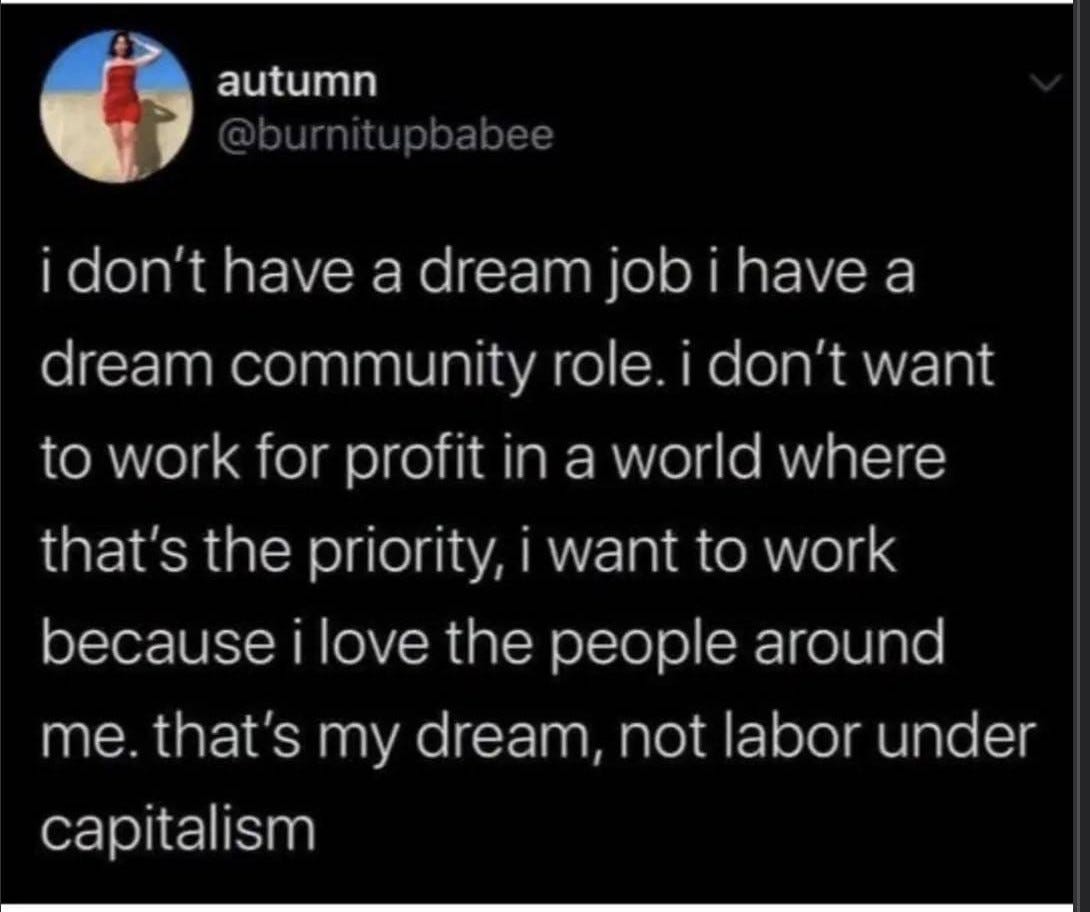
It is far more rewarding to spend your day helping others, that’s why professions such as social workers and nurses are heavily skewed towards women. Women do not derive the same happiness from increasing YoY sales by 0.3% as much as they do from nursing a sick child back to health.
Most men don’t really care about the sales targets either. They work to feed their family. That’s what’s rewarding.
Remember that “Afternoon tea” example from good housekeeping? Events like this served an important social purpose. Now that women are expected to work as much as men, they simply don’t have time or energy to plan all of this any more.
Even though men are more lonely, women report being less happy in the modern world on every major survey. Even with anti-depressant usage sky high.
“Of all the things which wisdom provides to make life entirely happy, much the greatest is the possession of friendship.” -Epicurus
For most older men, our social lives are almost entirely managed by the women we marry. Men will still speak to each other, but men do not make formal plans nearly as much. Nearly every barbecue, get-together, or party will be instigated and planned by a woman.
American time-budget studies from 1965, 1975, and 1985, found that time spent on informal socializing and visiting declined by roughly one-quarter between 1965 and 1985. Time spent in clubs and organizations fell even more sharply.
Every sociology study shows that the average American became less social when women joined the workforce. This is not the sole cause of our loneliness, but it is a factor that cannot be ignored.
“In short, informal social connectedness has declined in all parts of American society.” -Robert Putnam (2000)
The answer is completely changing society
The solutions to these problems are not hiding from us.
Large families need to make a comeback
The economy needs to become more localized to discourage moving.
Global supply chains need to move back to more localized versions
Women need to largely leave the workforce.
However, these solutions will destroy society as we know it. Shareholder value will tank, the stock market will collapse down to realistic levels, GDP will decrease in our attempt to make society better.
We will have to implement a solution before society destroys itself, which it is on track to do.
As of the time of writing, every major industrialized economy is dying. We all live in societies that are not replacing themselves. Without immigration, the US population and economy would be shrinking. And in western Europe, there are more deaths and births even with immgration.
And more immigration is not a solution to this, because the places the immigrants are coming from are dying off too. We live in a society where cross-culturally people do not have the will to continue it. And why would they, when there’s nothing to live for?
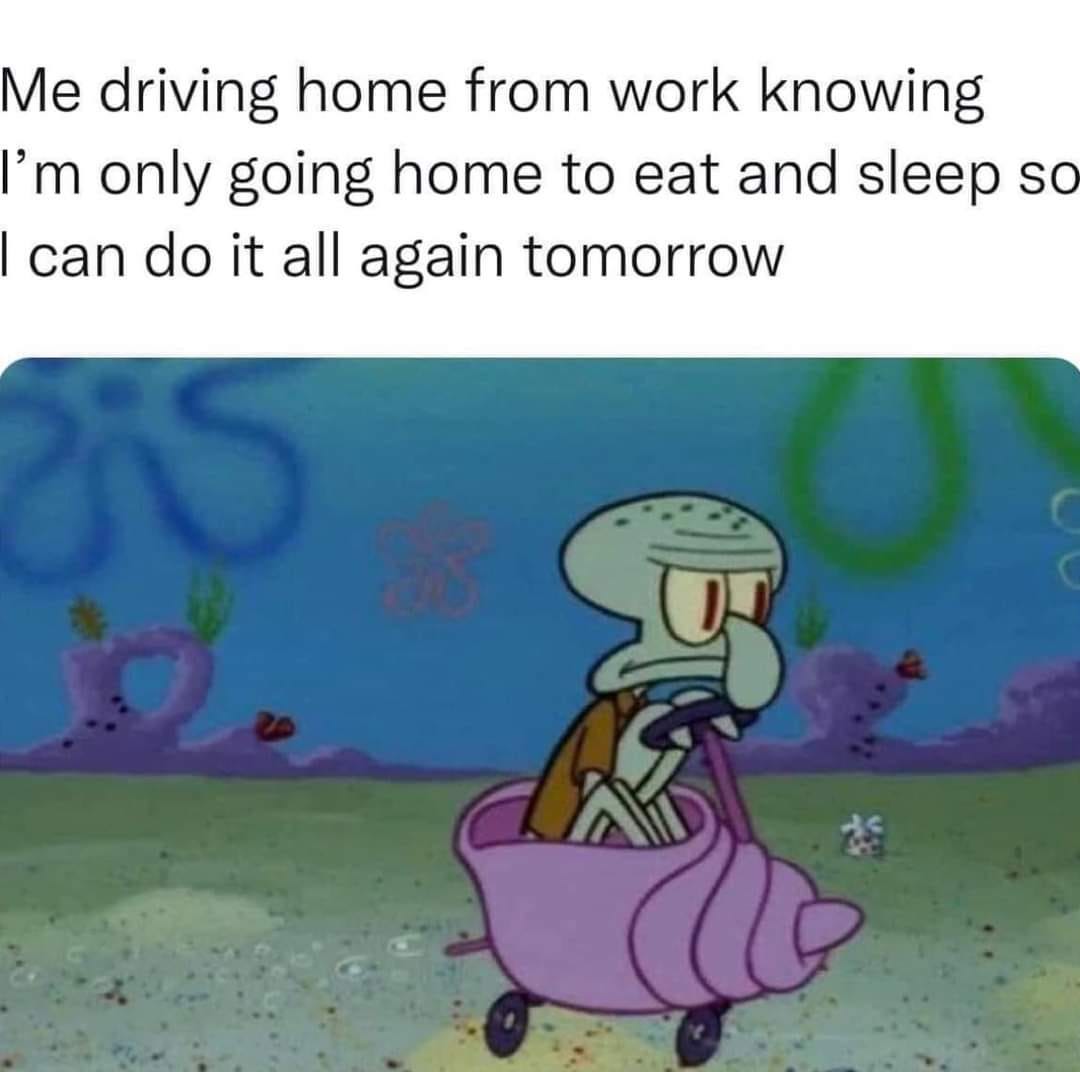
Work was meant to supply us with the things we need to live, not be the reason we live.
We have embraced materialism in an effort to be fat and happy, but we only got fat. The world is so inundated with cheap plastic from China that is has entered our brains.
The modern person works more than his ancestors for money that can be endlessly printed. All to come home to an empty apartment in a city full of strangers.
The solutions are radical because the problems are radical too. We must willingly give up some of our luxuries in order to find true happiness. The conveniences of globalism were purchased with our souls. And man cannot live on bread alone.
Support your local craftsmen, buy from farmer’s markets, find a baker and buy their bread. Find the people behind the economy, and talk to them. While you’re doing this, you might just make some friends.
Reject hustle culture, live outside of a major city. Focus on the local, not the international.
“But around the one astral lamp which then shed its uncertain rays upon the family circle there were the same elements of which human society is now composed, and there was one amusement present whose absence we now sometimes have to regret. We refer to that lost art of conversation.”
M. E. W. Sherwood, Home Amusements (1881)
The “Nuclear Family” was an experiment gone very wrong. It was set upon the masses to sell things….furniture, clothing, food etc. At first it was OK because you bought a house down the street from your parents or sibling, but then the factories and business expanded and people started moving farther away from one another. I still believe that mulit-generational living is the way to go. The Walton’s was pretty true to form about how people lived in those days…..not a lot of money, but always full of family and friends gathered around a table.
I have a children's book from the 1950s and it was striking to me how often kids were outside together unsupervised, or having parties, or organizing little events. Sunday mornings the parents would have their kids walk alone to Sunday school. Unsurprising that this generation grew up thinking church was not very important. It was just a few hours of weekend childcare for the parents who were already only seeing their kids in the evening